Understanding Acid Rain: A Comprehensive Guide
Acid rain, a significant environmental issue, is caused by atmospheric pollution. It refers to precipitation – rain, snow, sleet, or fog – that is more acidic than normal. Normal rain is slightly acidic, with a pH of around 5.6, due to the presence of dissolved carbon dioxide. Acid rain, however, typically has a pH of 4.3 to 5.0.
The Science Behind Acid Rain: Chemical Reactions
The formation of acid rain involves complex chemical reactions. The primary culprits are sulfur dioxide (SO 2 ) and nitrogen oxides (NO x ), which are released into the atmosphere through various human activities and natural processes.
Sulfur Dioxide (SO 2 ) and Its Reactions
Sulfur dioxide is mainly produced by the burning of fossil fuels, especially coal, in power plants and industrial facilities. Volcanoes and other natural sources also contribute, but human activities are the dominant cause.
Once in the atmosphere, SO 2 undergoes a series of oxidation reactions. The initial reaction involves the oxidation of sulfur dioxide to sulfur trioxide (SO 3 ):
2SO 2 (g) + O 2 (g) → 2SO 3 (g)
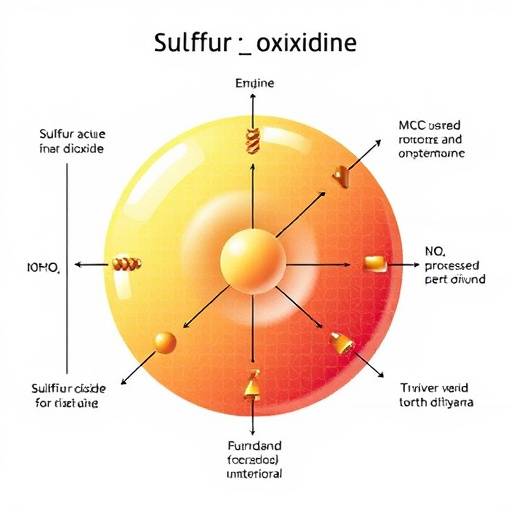
Sulfur trioxide then reacts with water in the atmosphere to form sulfuric acid (H 2 SO 4 ), a strong acid:
SO 3 (g) + H 2 O(l) → H 2 SO 4 (aq)
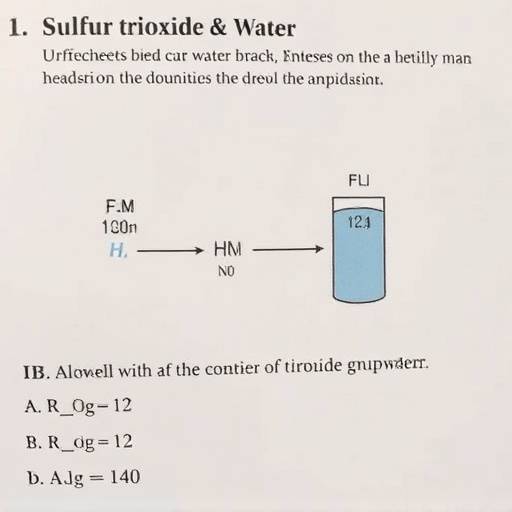
This sulfuric acid dissolves in atmospheric moisture and falls to the earth as acid rain.
Nitrogen Oxides (NO x ) and Their Reactions
Nitrogen oxides, primarily nitric oxide (NO) and nitrogen dioxide (NO 2 ), are produced from the combustion of fossil fuels in vehicles, power plants, and industrial processes. Lightning and microbial activity in soil are also natural sources of NO x .
Nitric oxide (NO) readily reacts with oxygen in the air to form nitrogen dioxide (NO 2 ):
2NO(g) + O 2 (g) → 2NO 2 (g)
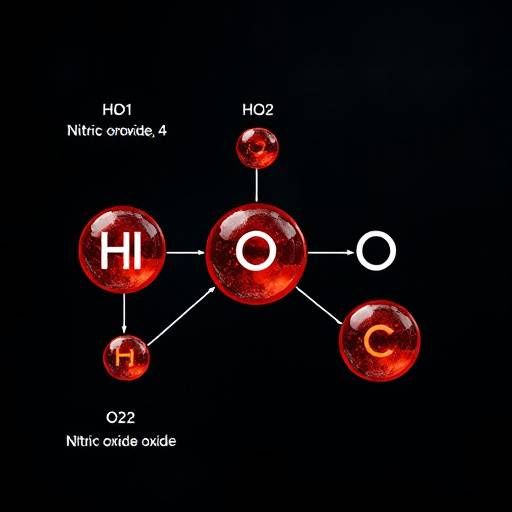
Nitrogen dioxide can then react with hydroxyl radicals (OH • ) in the atmosphere to form nitric acid (HNO 3 ):
NO 2 (g) + OH • (g) → HNO 3 (aq)
Like sulfuric acid, nitric acid dissolves in atmospheric moisture and contributes to acid rain.
Sources of Pollutants Causing Acid Rain
Identifying the sources of sulfur dioxide and nitrogen oxides is crucial in combating acid rain. These pollutants come from both human and natural sources, but human activities are the predominant contributors.
Human Sources
- Fossil Fuel Combustion: The burning of coal, oil, and natural gas in power plants, factories, and vehicles releases large amounts of SO 2 and NO x into the atmosphere. Coal-fired power plants are particularly significant sources of SO 2 .
- Industrial Processes: Certain industrial processes, such as smelting of metal ores, refining of petroleum, and manufacturing of cement, release SO 2 and NO x as byproducts.
- Transportation: Motor vehicles, including cars, trucks, and buses, emit NO x through the combustion of gasoline and diesel fuel.
- Agriculture: Agricultural activities, particularly the use of fertilizers, can lead to the release of ammonia (NH 3 ) into the atmosphere, which can react to form ammonium nitrate, contributing to acid deposition.
Natural Sources
- Volcanoes: Volcanic eruptions release large quantities of sulfur dioxide and other gases into the atmosphere.
- Lightning: Lightning strikes can produce nitrogen oxides from atmospheric nitrogen and oxygen.
- Biological Decay: The decomposition of organic matter in soil and wetlands can release small amounts of sulfur compounds and nitrogen oxides.
Dry Deposition
It's important to note that not all SO 2 and NO x end up in acid rain. Some of these pollutants and acidic particles can be deposited directly onto surfaces such as soil, water, and vegetation in the form of dry deposition. These dry-deposited pollutants can then be washed off by rain, contributing to the overall acidification of ecosystems.
Measuring Acidity: The pH Scale
Acidity is measured using the pH scale, which ranges from 0 to 14. A pH of 7 is neutral, values below 7 are acidic, and values above 7 are alkaline (basic). Each unit on the pH scale represents a tenfold change in acidity. For example, a solution with a pH of 4 is ten times more acidic than a solution with a pH of 5.
Acid rain is defined as precipitation with a pH below 5.6. The lower the pH, the more acidic the rain.
Regional Variations in Acid Rain
The severity of acid rain varies significantly across different regions, depending on factors such as the concentration of industrial activity, the prevailing wind patterns, and the buffering capacity of the soil and water.
Areas downwind of major industrial centers often experience the most severe acid rain. For example, regions in eastern North America and Europe have historically been heavily affected by acid rain due to emissions from coal-fired power plants and industrial facilities.
EcoSolutions Alliance: Our Commitment
At EcoSolutions Alliance, headquartered in Boston, Massachusetts, we are dedicated to understanding, mitigating, and preventing acid rain. Our team of environmental scientists, led by Dr. Emily Carter and Professor James O’Connell of MIT’s Department of Earth, Atmospheric and Planetary Sciences, conducts research, develops innovative solutions, and collaborates with industries and governments to reduce emissions and protect our environment. Contact us at info@ecosolutionsalliance.org or call us at (617) 555-7890. Our office is located at 101 Main Street, Suite 1400, Boston, MA 02142.
Explore the other sections of our website to learn more about the effects of acid rain and the solutions we are implementing.